


The Calcium Problem in Mixed Gendered Chicken Flocks
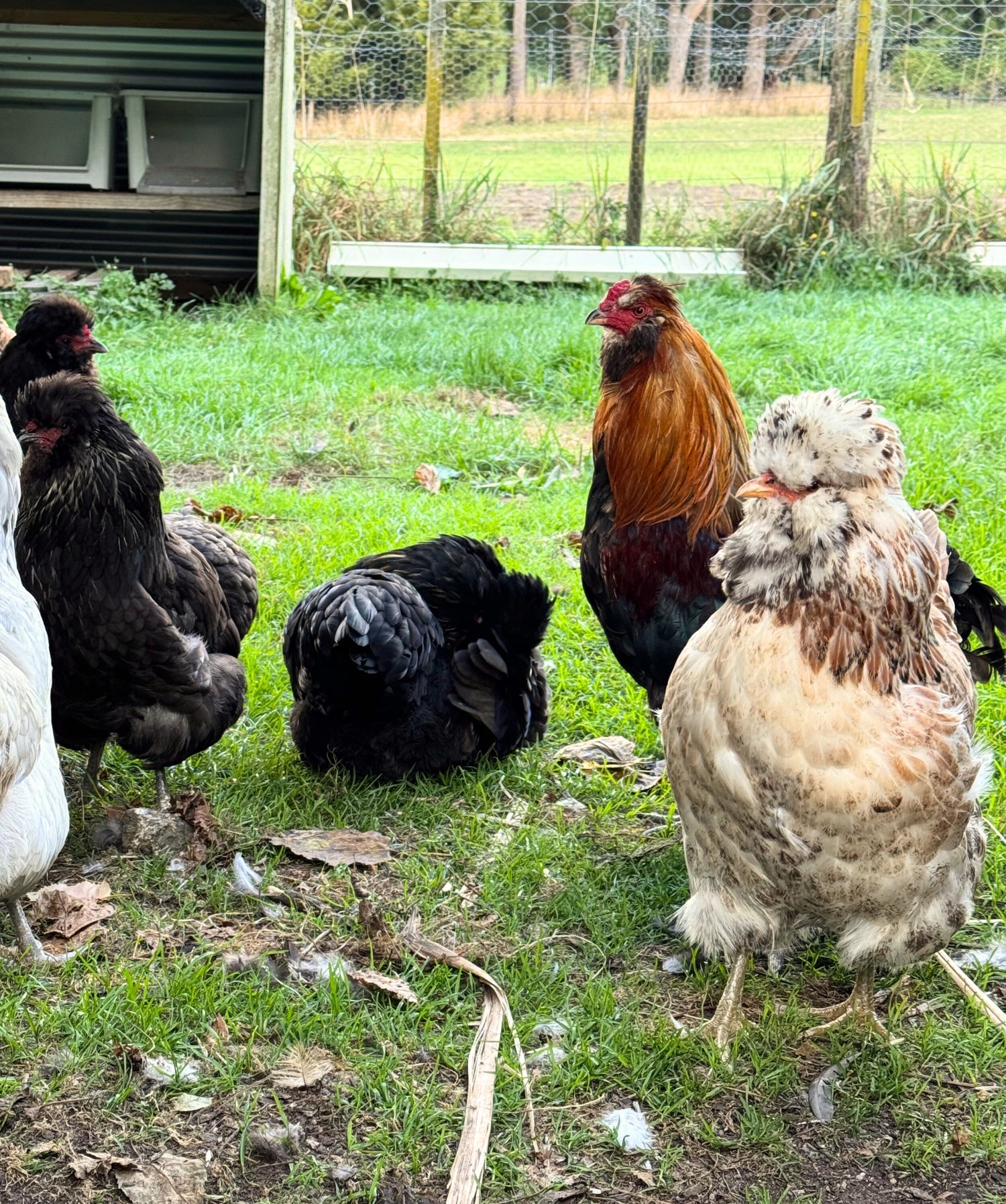
Backyard chicken keeping has become incredibly popular across New Zealand. Many flocks include a mixture of hens and roosters, which can work well socially, but it creates one of the most common nutrition mistakes we see in backyard birds: feeding layer feed to the entire flock.
While layer feed is designed specifically for laying hens, it can cause serious long-term health problems in roosters and non-laying birds.
Understanding why this happens, and how to manage feeding in mixed flocks, can make a huge difference to the health and longevity of your birds.

Why Layer Feed Exists
Layer feed is formulated for egg production. When a hen produces eggs, she loses a large amount of calcium every day through the eggshell.
To replace this, layer feed typically contains 3.5–4.5% calcium, which is far higher than what a normal chicken requires.
For laying hens, this extra calcium is essential.
For other birds in the flock, however, it can be harmful.

The Problem for Roosters
Roosters do not lay eggs, so they do not need elevated calcium levels in their diet.
When roosters eat layer feed long-term, they are exposed to excess dietary calcium, which their bodies cannot regulate as effectively as laying hens.
Over time this can contribute to:
- Kidney damage
- Urate gout
- Mineral deposits in organs
- Reduced lifespan
We often see roosters presenting with kidney disease that may have been developing quietly for years.

Other Birds Affected
Roosters are not the only birds at risk.
Layer feed can also be inappropriate for:
- Young birds (pullets and cockerels)
- Non-laying hens
- Birds in moult
- Retired hens
- Some duck and waterfowl species
These birds simply do not require the same calcium levels as an actively laying hen.

Why Mixed Flocks Make Feeding Difficult
In backyard systems, birds are usually fed together from the same feeder.
This means:
- Roosters eat layer feed
- Pullets eat layer feed too early
- Non-laying birds receive unnecessary calcium
Many keepers are unaware this can cause problems because the effects develop slowly.
The Take Away
Layer feed is excellent for hens producing eggs, but it is not designed for every bird in the flock.
In mixed-gender flocks, feeding layer feed as the sole diet can expose roosters and other birds to chronic calcium overload, which may lead to kidney disease over time.
By feeding a lower calcium base diet and offering calcium separately for laying hens, you can keep both hens and roosters healthy in the same flock.
Poultry Support
-
Bird Probiotics - 100g
Regular price $29.50 NZDRegular price -
Bird Vitamins - 100ml
Regular price $28.50 NZDRegular price -
Bird Electrolytes - 100g
Regular price $24.50 NZDRegular price -
Bird Iodine - 15ml
Regular price $28.00 NZDRegular price


